


NEWSLETTER - MAY 2026

Updated: Apr 24

FROM THE PRESIDENT.
SABA FEEDBACK
It has been a very busy kick off to the year and the 1st quarter has come and gone.
The mini-Convention, hosted by BRAT in Gauteng at the end of November 2025, was a well organised and smooth event with excellent content as far as demonstrations and talks are concerned. It again showcased that our own South African bonsai artists does not have to stand back for their international counterparts!
The AGM was also held during the convention with everybody on the EXCO being re-elected for another year. Minutes of the meeting (which must be approved at the next AGM), will be distributed to all members.
Lesley Haw, Vice-President, resigned from the EXCO in January 2026. The rest of the EXCO decided that another representative from the BRAT region was required on the EXCO and Liam O’Flaherty, from Pretoria Bonsai Kai has accepted to be co-opted to fill this role. We would like this opportunity to thank Lesley for the faithful and very crucial role that she has played in her tenure on the EXCO. At the same time, we would like to wish Liam all the best and are confident that he will make a meaningful contribution to the EXCO.
Lesley has indicated that she is willing to carry on assisting with the management of SABA’s social network platforms and also assist Dawn Collier with the communication, which was one of the aspects of SABA that she put in place and streamlined during her tenure.
In the above regard, it has been decided that all newsletters, articles etc. will in future be published on the website and only links to these will be distributed via the other existing SABA communication channels. Can we please ask all clubs, individual members and Vendors to update their contact details with Dawn to ensure that future communication reach you. (E-mail: blaauwbergbonsaikai@gmail.com)

The next mini Convention will be hosted in Bloemfontein by Bloemfontein Bonsai Kai over the weekend of 24 to 25 October 2026, so please note in your diaries. Communication regarding the event will be distributed soon.
With Autumn in full swing and winter on our doorstep, enjoy your bonsai tasks with the changes in season and appreciate your deciduous bonsai without their leaves during winter!
Yours in Bonsai,
SABA EXCO
World Bonsai Day 2026
Celebrating Bonsai Art and Its Legacy in South Africa
“By nurturing a bonsai, we learn the essence and dignity of life.”
-Master Saburo Kato
1915 - 2008
The Significance of World Bonsai Day
Each year, the second Saturday of May is celebrated as World Bonsai Day. This internationally recognised event is dedicated to promoting awareness and appreciation for bonsai. World Bonsai Day was first observed in May 2010, in honour of Bonsai Master Saburo Kato's mission for peace through bonsai.

Saburo Kato's vision was to use bonsai as a bridge for peace. The day has become a cornerstone of the bonsai community, offering a chance for bonsai artists and admirers to step away from daily anxieties, practice mindfulness, and find inner peace. This sense of tranquillity can then be shared with others. Bonsai is an opportunity to separate from the anxieties of the world – a chance for bonsai artists or admirers to collect their thoughts, practice mindfulness and find inner peace which they can then focus outward.

Bonsai: Symbolism and Cultural Impact
Bonsai trees symbolise harmony and balance in Japanese culture, reflecting the beauty of nature in a small, controlled environment. They require patience and dedication to create and maintain their unique miniature forms. Throughout his life, Bonsai Master Saburo Kato walked the path of peace and friendship, always helping others understand the true meaning of bonsai. Like the Buddhist monks, who centuries ago spread the art of bonsai from China to Japan and other countries, Saburo Kato realised that bonsai fosters compassion and brings about a deep respect for life.
Finding Peace Through Bonsai
“We hope that during this time of war, violence and unrest in our human history, you have been able to find peace through bonsai and help spread it to the world”. These words are very significant in 2026, with global disruptions and unrest.
Bonsai in South Africa: Recognising Local Pioneers

For us here in South Africa, it is an opportunity to recognise and honour our own. Betty (often referred to as Becky) Lucas is recognised as the mother of bonsai in South Africa, having formally introduced the art form to the country around 1945. Some of her original bonsai trees are still housed in the Bonsai Arboretum in Stellenbosch . She is considered the organiser of bonsai in South Africa, with her influence particularly prominent in the Western Cape region. Her work laid the foundation for the "Western Cape Bonsai Heritage Collection" and the Cape Bonsai Kai, which continues to display high-quality bonsai in the region.
Other Influential Figures
Other South Africans include the late Charles Ceronio , who started growing bonsai in 1968. A number of his trees are on exhibition in the Pretoria Botanical Gardens, maintained and nurtured by the Pretoria Bonsai Kai. Rudi Adams is one of the foremost names in South African bonsai and a widely respected bonsai expert. In over a decade he accumulated approximately 90 awards for his trees from various international exhibitions, from a collection that he built up of hundreds of trees. Other names of note are Louis Nel and Doug Hall.
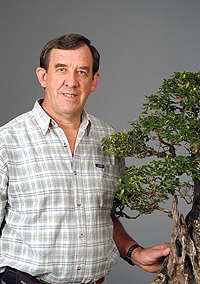
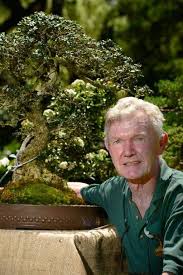
Pictures: Stone Lantern Bonsai Nusery
The Bonsai Tree: Art, Nature, and Meaning
The bonsai tree is truly a form of art, combining creativity and nature to bring serenity and beauty to those who appreciate it. Bonsai trees are living sculptures, making them a wonderful gift for someone special. They symbolise beauty and strength, and embody qualities such as harmony, serenity, patience, and elegance. Bonsai trees represent a perfect balance between nature and art, showing how people can attain inner peace through mindful cultivation.

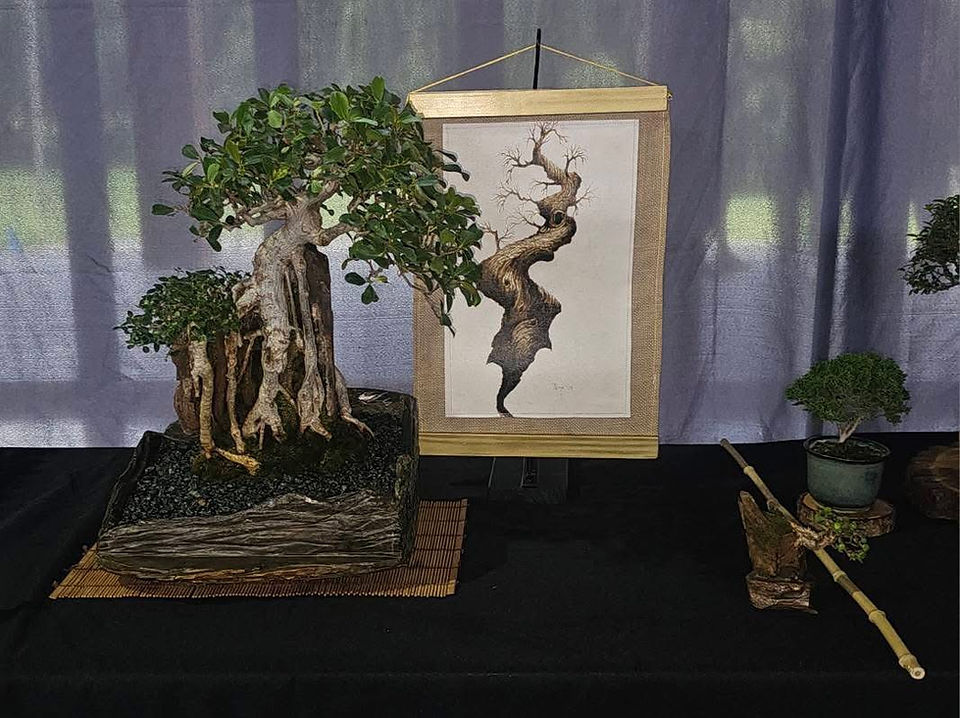

Bonsai from the SABA Conventions. Pic 1 Gary Howes wining tree Convention 2025.
Good Fortune and Bonsai
The tradition of gifting a bonsai tree carries a special meaning. It is widely believed that those who receive a bonsai from someone dear to them are destined to experience good luck and achieve success. This symbolic gesture emphasises the positive energy and fortune associated with bonsai, extending heartfelt wishes to everyone. In the spirit of this symbolism, we wish all a joyous, peaceful, and friendly celebration of World Bonsai Day.
The Relationship Between Age and Value in Bonsai
By Lesley Haw
Personal Perspective and Disclaimer
This article presents a personal viewpoint and is not meant to discredit or imply any wrongdoing by anyone.
Age and the Perception of Bonsai Value
I often receive inquiries from individuals wanting to sell their “bonsai.” The conversation frequently revolves around the estimated age of the tree. Too often, what I see is simply a tree in a pot—without any applied bonsai techniques, refinement, or much more than a thick trunk.
Pictures: Pixabay
While age is an important factor in determining a bonsai's value, it does not determine value on its own. Many social platforms showcase a variety of trees for sale, with some exhibiting refinement and others lacking it entirely. Unfortunately, many listings seem to rely solely on age as their selling point. Just as the price of a used car is influenced by age, condition, rarity, and ownership history, the value of a bonsai depends on several concrete factors that experienced collectors and sellers use to justify their prices.
Generally, older trees command higher prices because of decades or even centuries of training, care, and development that create mature, artistic, and refined specimens. However, a tree's value is a combination of many factors.
Here’s my perspective on how age relates to the value in bonsai:
- Age vs. "Time in Training": A 30-year-old tree that has only been in a pot for a year is less valuable than a 10-year-old tree that has been carefully trained for a decade. True value lies in the refinement, trunk character, branch structure, and ramification developed through years of intentional training.
- The "Illusion of Age": The primary goal of bonsai is to make a tree appear old, regardless of its actual age. A well-trained, younger tree that successfully creates this illusion can be more valuable than a very old, poorly maintained tree.
- Other Key Factors Influencing Value:
- Trunk and Nebari: A thick, tapered trunk with interesting movement and a developed root base (nebari) adds significant value.
- Species and Rarity: Rare species or those that are difficult to cultivate often fetch higher prices.
- Provenance: Trees with a known and prestigious history (e.g., having been worked on by a master or passed down through generations) are highly valued. Sadly, not something we see a lot of in South Africa.
- Styling and Artistic Merit: A tree styled by a recognized bonsai grower or artist will command a higher price than similar material worked on by a newcomer. The artist's reputation, awards, and provenance all factor into pricing. Even among lesser-known artists, the quality of styling is evident to a trained eye. Clean lines, proper proportions, convincing illusion of age, and overall aesthetic harmony differentiate "trees in pots" from well-developed bonsai.
- Health and Vigor: A healthy, thriving tree is always more valuable than a sick or weak one. A healthy bonsai will exhibit strong growth, good foliage, and show no visible pests or diseases. Trees with health issues will always be priced lower. Recovery time and the associated risks significantly influence pricing; buyers are willing to pay a premium to avoid potential problems.
- Pot Quality: A pot can account for 20% to 40% of the total value, especially if it is hand-thrown, antique, or artist-signed. This is most common with higher-end trees. Conversely, many less refined trees feature mismatched pots in size, colour, style, and proportion.
In conclusion, while age significantly contributes to a bonsai's value—often indicating the development of the artistic features that collectors desire—age is not the only factor that determines worth. An old tree that still requires years of work does not qualify as a bonsai.
Liam’s new talent tips
Everyone might have their own approach to the competition, this is simply how I would approach the competition based on the previous times I’ve judged it; the times I’ve helped people and the times I did the exercise myself in training/help sessions.
THIS IS JUST MY PERSONAL OPINION, MAYBE IT CAN HELP YOU.
1. Look at the previous winners.
At the bottom of this document are some excellent examples of previous new talent entries that were kindly shared with me. I studied these and found common denominators, characteristics and similarities that can be considered when attempting the competition.
Many people have confessed they looked at Japanese show bonsai as inspiration and put that image in their minds before doing the competition. I don’t believe in that technique, and everyone I know that tried this route, it didn’t work for them. RATHER GET INSPIRATION FROM THE PREVIOUS WINNERS. THEY CREATED THOSE TREES UNDER THE EXACT CIRCUMSTANCES AS WHAT YOU ARE DOING.
2. Prep.
Definitely take gloves and wear them till the final stage which is fine/thin twig wiring. You can’t waste time attending to finger cuts, irritated and itchy hands etc.
Pre-make your front indicator. A looped piece of wire, and make it neat, it creates a good impression.
Sharpen your tools, The last thing you want are tools that can’t cut or damage branches because they blunt.
Take a neutral-coloured cloth to block out branches, to imagine they were gone to study options better when deciding the composition of your tree.
Having a rotating table helps, you must have one actually.
Only put the tools you need on the table. I don’t need my whole toolbox in my way. All I have on the table is: A rake, a saw, knob cutter, concave branch cutter, long trimming scissors, a knife, a steel brush, a spray bottle, pliers (wire cutter) and the cloth. Keep the tools in the same order and on the same place on the table every time. I hate looking for the tool I used a minute ago and it just wasted my time looking for it. I don’t need any more tools that just create confusion on my table.
Have proper triangle spacers to angle the tree, don’t use bricks and old pieces of dirty wood etc, it’s not neat enough for me. Neatness is a major factor for me.
Also next to your tools is wire. Straightened or new wire. All the same colour. Having different colours isn’t neat enough for me. I only needed 3 thicknesses:
Very thin wire for foliage wiring, medium wire for pencil thick branches and thicker wire for finger thick branches. That’s all, I don’t attempt wiring huge fat branches, and the junipers are so easy to bend. In my opinion people are using way too much wire and trying to wire massive branches, which I don’t believe in, in this competition.
Also get a blank score sheet your club uses, read through it and keep it with you, you are going to look at it later. So many people tell me they don’t actually know what they are being judged on.
EVERYTHING YOU DO FROM NOW, YOU MUST DO AS NEATLY AS POSSIBLE. LIKE SERIOUS OCD SOLDIER INSPECTION NEAT.
BIG HINT.
Don’t try think ‘out the box’ and think of doing something completely wow. You must think as conservatively and as simply as possible. These junipers are so crazy, that even when you trying to make a simple text-book tree, the juniper itself will give you the creativity required. If these junipers are crazy, and you try go crazy, you mixing crazy with crazy and you just going to make a confusing tree. Try imagine it as taming a beast. Have a look at the previous winners, you will see what I mean. Also, other previous winners have just confessed they just applied the basic simple rules… triangle shape, left right back, apex and it worked for them. I’m not saying try make a tree like that, I’m just saying think simple and play it safe.
Avoid way-out designs like wind swept, cascade, literati etc. Again, look at the previous winners, they 10 to 1 informal up right simple small trees. However, if you do get two or three trunks, try use them.
STEP 1.
Lower the plastic neatly, remember everything now must be super neat. Either fold it down or cut it NEATLY.
Rake the top layer of soil and expose the nebari. Over the top long branches that extend way to far past the perimeter of the bag I cut, because I’m not going to do a cascade or anything crazy.
Choose the front based on:
Best nebari and root flare, trunk movement, available branches and the availability to make ONE apex. Too many people make confusing trees with more than one apex, I believe in making a tree with one apex. These trees often have a section of reverse taper, and if possible choose a front that hides reverse taper. YOU WILL RARELY GET A FRONT THAT’S PERFECT IN ALL THESE TRAITS, YOU GOING TO HAVE TO MAKE THE BEST CHOICE POSSIBLE, TAKE TIME CHOOSING A FRONT YOU BELIEVE IN, BUT A COMMON MISTAKE THAT I AVOID IS CHOOSING A FRONT THAT HAS AN APEX THAT I CANT MAKE FACE FORWARD. YES… YOU CAN TILT THE TREE, JUST MAKE SURE YOU HAVE AN APEX THAT CAN WORK THAT HAS FOLIAGE CLOSE TO THE TRUNK.
IF YOU HAVE A TREE THAT STARTS RIGHT (NEBARI)… AND ENDS RIGHT (APEX)… THE MIDDLE BECOMES EASIER. START RIGHT, END RIGHT AND YOU MORE THAN 50% AHEAD OF YOUR COMPETITORS. THEN YOU HAVE A CLEAR PLAN.
STEP 2.
Select branches….
YOUR BIGGEST FRIEND IS FOLIAGE CLOSE TO THE TRUNK. DO NOT REMOVE ANY FOLIAGE CLOSE TO THE TRUNK…. LOOK AT THE PREVIOUS WINNERS. BRANCHES THAT ARE LONG AND ONLY HAVE FOLIAGE AT THE END OF THE BRANCH ARE USELESS TO ME. I AM ONLY INTERESTED IN BRANCHES THAT HAVE FOLIAGE CLOSE TO THE TRUNK.
ALSO…
I DON’T USE FAT BRANCHES BECAUSE THEY UGLY, THEY MAKE THE TRUNK LOOK THINNER AND THEY JUST GOING TO BREAK IF I TRY WIRE THEM.
Remove obvious useless branches. Don’t use branches that are on the inside of trunk curves, only on the outside of trunk bends. Reassess your front, angle the tree with your neat triangle spacer blocks and clean off all branch cuttings from your table.
Start from the bottom and try creating a simple tree that has a visible trunk line, a side branch, a balancing branch, a back branch and an apex.
Keep the options of Jins open, don’t cut everything flush, leave stubs so you have the option to jin.
What I’m trying to do is make a very compact tree with foliage and branches and an apex close to the trunk. Like a shohin tree with very few branches that extend further than the edge of the plastic bag… but that’s my style and approach, you must do your thing. That’s also why I don’t need thick wire or have to use double wires, that to me, is just a mess. Not neat enough for me.
By this stage you’ve been turning your tree around a lot, keeping on going back and looking at your tree from the front view. Also keep pruned material off your table and remember to keep the tree neat.
After I have selected main branches and cut them back and…HAVE KEPT ALL FOLIAGE CLOSE TO THE TRUNK, and have a basic structure with a clear single apex, do I start with the first branch.
STEP 3.
Refining and shaping.
I only start wiring now because there are no branches in the way, I don’t stand a chance now of breaking wanted branches etc.
I now take off my gloves.
I refine and trim branches. Then wire. I find people use way too much wire. Also, one wire must always be used on two branches. Don’t ever use one wire for a single branch.
Also, always have the end of the wire facing backwards from the front view and cut flush with the branch, too often people leave these curly wires extending past the branch. That’s definitely not neat enough. Also don’t anchor your wire on dead wood and jins, that for me is a no-no.
After wiring the finger thick branches, then I wire the pencil thick branches, then the delicate thin foliage with that super thin wire. Always starting from the bottom branches then moving up, and starting from the trunk inside, then moving outwards. Bottom up, inside to out.
At this stage you pretty much on your own, I trust you creating something awesome. Remember, keep the foliage close to the trunk. A good standard is making branches horizontal and making an overall triangle shape. Try get inspiration for the previous winners.
Remember to work very neatly. Keep the cuts (prune marks) facing back. Wire ends facing back. Don’t cross wires. Don’t do unnecessary things like create jins at the back of the tree where you cant see them from the front view.
A common mistake is leaving stubs at the end of cut branches. Every branch must end with foliage. So almost always you have to wire foliage at the end of a branch where you cut it, so foliage continues with the flow and direction of the branch.
STEP 4.
Now… I don’t aim to finish my tree in the 4 hours given, because I’m not looking for tools and doing other silly things that waste time, I finish a tree in 2.5 hours.
The last 1.5 hours I do the following:
I look at my tree and make minor adjustments. DON’T DO ANYTHING DRASTIC, WHAT YOU DID IS WHAT YOU DID, ACCEPT IT. I’ve heard people breaking off an apex at the last minute etc. I’m talking minor snipping, minor foliage wire movement etc. Then I seriously clean up the jins. I try make them white-white by cleaning them with water, wire brushing them, snipping out loose messy fibers etc. Make sure the wire is neat, no loose ends etc. Cut all foliage facing down or that’s under the branches. Also try balance your foliage, try make sure all the branches have the same amount of foliage on. Thin out branches that are thicker and fuller than the rest of the branches. Then I grab that score sheet and score myself and I make sure I’ve done my best in every category.
Now I clean the top soil, make it very neat, no foliage and jin shavings etc. Then I even wipe down the black plastic bag.
GOOD LUCK, I HOPE THIS CAN HELP YOU…
Also watch the YouTube video titled ‘New talent lesson with Hardus Scheepers” on the channel @suikerbosbonsaikai
These are the trees of Christel, Hardus, Andre and Johann. Very nice of them to share pics of their amazing trees, very inspirational, talent indeed.


Comments